
A team of United States Coast Guard officials has described the security infrastructure at the Nigerian National Petroleum Company Limited’s Apapa Jetty as top-notch, following an audit visit to selected port facilities within the Lagos maritime zone between April 13 and 16, 2026.
The Jetty, for which Richrock Maritime Security and Logistics Limited serves as security consultant, was among some facilities assessed for compliance with the International Ship and Port Facility Security (ISPS) Code, the globally recognised framework for safeguarding ships and port facilities against security threats.
The audit, which was part of a broader evaluation linked to the United States Coast Guard’s ongoing review of Nigerian port facilities, was aimed at assessing ISPS Code compliance across the country’s maritime sector.
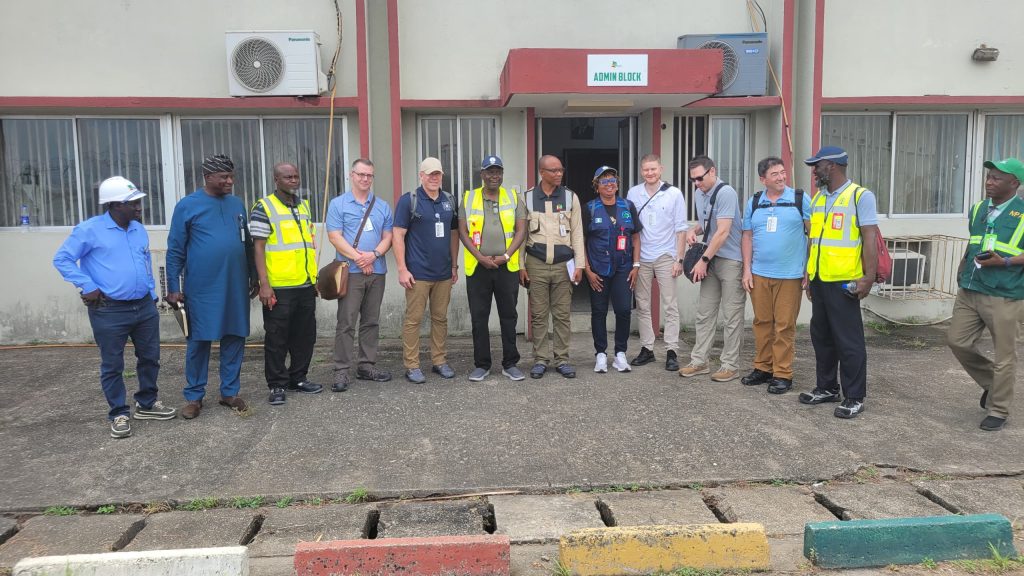
The visiting team led by the Chief of International Port Security Operations, Mr. Bryan Ullmer, rated the security infrastructure at the NNPC Apapa Jetty as top-notch, highlighting the facility’s CCTV Control Centre as particularly impressive. NNPC Limited has developed an integrated CCTV system that enables real-time monitoring of its maritime assets nationwide from its corporate headquarters, a capability that left a strong impression on the visiting officials.
A major contributor to the facility’s strong security profile is Richrock Maritime Security and Logistics Limited, its security consultant. In this capacity, the company provides advisory and technical support on ISPS Code-related requirements, playing a key role in the facility’s overall compliance.
The positive outcome of this exercise carries significant implications for Nigeria’s international shipping sector. The country has long operated under a Condition of Entry (COE), imposed by the United States on vessels arriving from Nigeria — a restriction linked to perceived gaps in port security compliance.
It is expected that favourable ratings recorded at facilities such as the NNPC Apapa Jetty will strengthen Nigeria’s case for the removal of the COE, a development that would ease the movement of Nigeria-bound vessels and reduce associated trade costs. The outcome is also anticipated to support efforts to lift the war risk premium on Nigerian maritime operations, further improving the country’s attractiveness to international shipping operators and investors.
